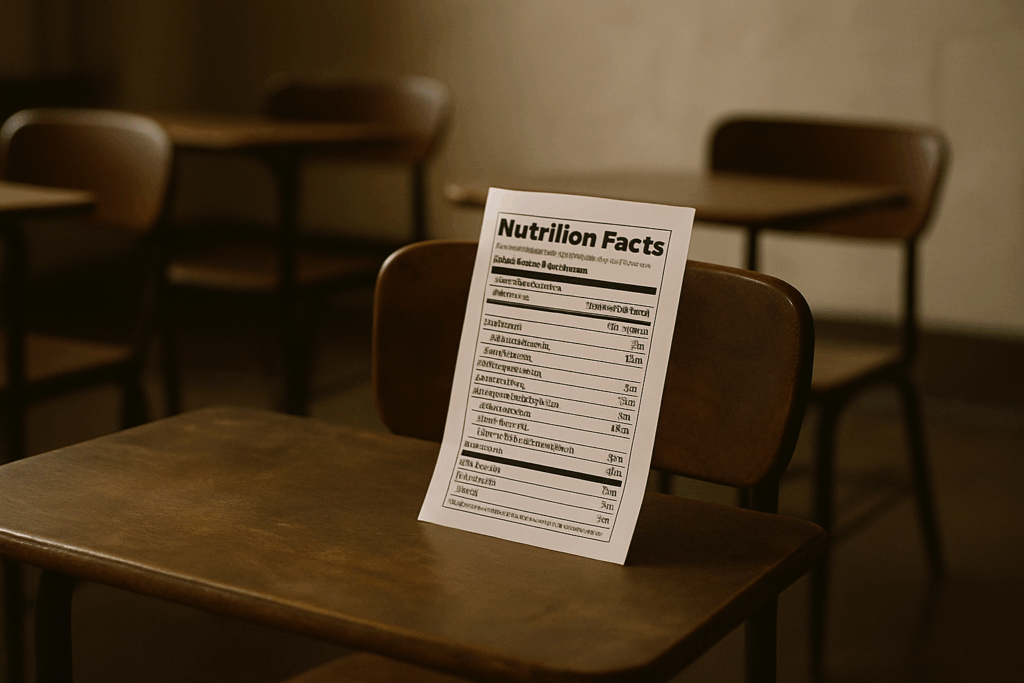
Start with the Serving Size
Reading food labels effectively begins with one critical number: the serving size. Every value you see on a Nutrition Facts label calories, sugars, fats, protein is based on this single unit. Misjudging it can mean you’re eating far more (or less) than you realize.
Why Serving Size Matters
All nutritional info is relative to the serving size listed.
Eating two or three times the listed amount? You’re also eating double or triple the calories, sugar, and sodium.
Watch for Sneaky Labeling Tricks
Some products use unrealistically small serving sizes to make the nutrition look better. This is especially true for snacks, soft drinks, sweets, and condiments.
Common examples:
A bag of chips labeled as “2.5 servings” but who stops before finishing it?
A small bottle of iced tea that lists nutritional info for only half the bottle
What to Do
Always check the serving size first, then compare it to how much you actually eat.
If you typically consume the whole package, multiply the numbers accordingly.
If you skip this step, even the healthiest looking food can mislead you.
Scan the Ingredient List First
Before you even check calories or sugar, go straight to the ingredient list. This section tells you far more about the quality of what you’re eating.
Understand Ingredient Order
Ingredients are listed by weight, from highest to lowest.
The first three ingredients often make up the bulk of the product so pay close attention.
If the list starts with sugar, syrup, or refined grains like white flour, it’s probably not the healthiest choice.
Red Flags to Watch For
Multiple types of sugar in the top ingredients (e.g., corn syrup, cane juice, fructose)? That’s a clue the product is sugar heavy.
Refined grains push out more nutritious whole ingredients and don’t offer the same benefits.
Look for Whole Ingredients
Aim to pick products that start with ingredients you can recognize and pronounce, such as:
Whole oats
Beans or lentils
Nuts and seeds
Real fruits or vegetables (not concentrates or powders)
Choosing products with whole food sources means you’re likely getting more fiber, nutrients, and long lasting energy.
Focus on Added Sugar, Not Just Total Sugar
A lot of people look at the grams of sugar on a label and move on. But here’s the thing: not all sugar is created equal. “Total sugar” includes natural sugars like those in fruit or milk and added sugars, the ones that manufacturers slip in during processing. It’s the added kind you really want to keep an eye on.
Added sugar hides behind friendly sounding names like agave, cane juice, brown rice syrup, and corn syrup. It’s sweet, sure, but it does nothing for your body except spike your blood sugar and leave you wanting more. According to the 2026 nutrition guidelines, most adults should aim for less than 24 grams or about 6 teaspoons of added sugar per day. That’s not a lot. One flavored yogurt or bottled iced tea can blow past that limit fast.
Want realistic ways to cut down without missing the sweet stuff? Check out these Top 7 Tips for Reducing Sugar Without Sacrificing Flavor.
Check for Fiber and Protein

If your breakfast bar or cereal isn’t pulling at least 3 grams of fiber and a decent hit of protein, it’s basically sugar disguised as food. Fiber slows digestion, keeps blood sugar steady, and helps you feel full longer not just for 30 minutes. Protein adds staying power too. A combo of the two turns a snack into a real meal.
Check the ingredient list: oats, lentils, chickpeas, or other whole grains and legumes are your best friends here. They beat out refined starches every time. Labels like “made with whole grains” don’t mean much unless those whole grains are high on the list. Dig deeper. Breakfast should hold you down, not just hype you up for a crash an hour later.
Don’t Get Fooled by Buzzwords
Food packaging is built to sell, not to inform. Just because something says “natural,” “light,” or “made with real fruit” doesn’t mean it’s doing your health any favors. Those words aren’t tightly regulated, and companies use them to distract from what’s actually inside the box.
The only way to know what you’re really getting is to flip the package over. Check the ingredient list and the nutrition facts. How much sugar is in it? Are the first few ingredients whole foods or a parade of syrups and starches?
Claims on the front are sales tactics. The numbers on the back are facts. Read those before you drop anything in your cart.
Understand the Daily Value %
When you’re reading a food label, the % Daily Value (%DV) gives you quick insight into how much a nutrient in a serving contributes to your total daily intake, based on a 2,000 calorie per day diet.
What Does %DV Mean?
It shows whether a serving of the food is low or high in a nutrient.
This can help you compare products and understand how a food fits into your overall diet.
Use This Simple Rule:
5% DV or less = Low
20% DV or more = High
These numbers apply to anything listed on the label from fiber, iron, and calcium to less desirable nutrients like saturated fat, sodium, and added sugars.
What to Watch For:
Keep low: Saturated fats, sodium, and added sugars. If they’re nearing or above 20% DV per serving, that food may not be your best choice.
Aim high: Nutrients like fiber, calcium, vitamin D, and iron are typically harder to get enough of, so 20% or more is great.
Understanding %DV helps you make smart decisions quickly and gives you more control over your nutrition, without having to memorize every number.
Shorter Lists = Usually Better
When it comes to ingredient lists, less is more. A short list often means the food is less processed and closer to its original form think oats, almonds, salt. That’s what you want. The longer the list, the more likely you’re dealing with a lab experiment in a wrapper.
You don’t need a chemistry degree to make a smart choice. Just use common sense: if the label reads like your high school science textbook potassium sorbate, mono and diglycerides, artificial flavor #7 put it down. Whole foods don’t hide behind code names.
A good rule of thumb: if you wouldn’t cook with it at home, question why it’s in your snack.
Final Take: Small Swaps, Big Impact
Reading food labels isn’t about turning every trip to the grocery store into a stress test. It’s about gaining control understanding what’s in your food so you can make smarter, more informed choices. This doesn’t mean cutting everything out or obsessing over every nutrient.
Think in Terms of Swaps
Instead of rigid elimination, focus on meaningful substitutions:
Choose whole grains instead of refined grains
Opt for low sugar yogurts over flavored varieties packed with additives
Grab snacks with fiber and protein to stay full longer
Watch for added sugars and assess if the sweetness is worth it
Build the Habit, Not the Hype
The more often you scan ingredient lists and nutrition facts, the easier it becomes to spot what supports your health and what doesn’t.
Don’t be swayed by buzzwords on the front of the package
Use the % Daily Value to spot excess sodium and saturated fat
Stick with products that have simpler, recognizable ingredients
Staying label savvy in 2026 won’t make your diet perfect but it will make it better. A few consistent, informed choices can compound into long term health benefits.
Start small. Choose better. Stay aware.

 Ask Jalric Velmyre how they got into delicious recipe ideas and you'll probably get a longer answer than you expected. The short version: Jalric started doing it, got genuinely hooked, and at some point realized they had accumulated enough hard-won knowledge that it would be a waste not to share it. So they started writing.
What makes Jalric worth reading is that they skips the obvious stuff. Nobody needs another surface-level take on Delicious Recipe Ideas, Meal Prep Ideas, Healthy Eating Tips. What readers actually want is the nuance — the part that only becomes clear after you've made a few mistakes and figured out why. That's the territory Jalric operates in. The writing is direct, occasionally blunt, and always built around what's actually true rather than what sounds good in an article. They has little patience for filler, which means they's pieces tend to be denser with real information than the average post on the same subject.
Jalric doesn't write to impress anyone. They writes because they has things to say that they genuinely thinks people should hear. That motivation — basic as it sounds — produces something noticeably different from content written for clicks or word count. Readers pick up on it. The comments on Jalric's work tend to reflect that.
Ask Jalric Velmyre how they got into delicious recipe ideas and you'll probably get a longer answer than you expected. The short version: Jalric started doing it, got genuinely hooked, and at some point realized they had accumulated enough hard-won knowledge that it would be a waste not to share it. So they started writing.
What makes Jalric worth reading is that they skips the obvious stuff. Nobody needs another surface-level take on Delicious Recipe Ideas, Meal Prep Ideas, Healthy Eating Tips. What readers actually want is the nuance — the part that only becomes clear after you've made a few mistakes and figured out why. That's the territory Jalric operates in. The writing is direct, occasionally blunt, and always built around what's actually true rather than what sounds good in an article. They has little patience for filler, which means they's pieces tend to be denser with real information than the average post on the same subject.
Jalric doesn't write to impress anyone. They writes because they has things to say that they genuinely thinks people should hear. That motivation — basic as it sounds — produces something noticeably different from content written for clicks or word count. Readers pick up on it. The comments on Jalric's work tend to reflect that.