Why Knife Skills Matter in 2026
Knife skills aren’t just for chefs they’re essential for every home cook. Whether you’re preparing a quick weeknight dinner or a full course meal, improving your technique in the kitchen brings immediate benefits.
Practical Benefits of Sharpening Your Skills
Save Time: Clean, efficient cuts make prep work faster and more manageable. Knowing how to chop an onion properly, for example, can shave minutes off your meal prep.
Reduce Food Waste: Precision cuts help you get the most out of your ingredients. No more over trimming herbs or losing half a carrot to imprecise slicing.
Safety First: Grip and Control
Avoiding injury in the kitchen starts with proper handling:
Master the Pinch Grip: Gripping the blade between your thumb and forefinger (instead of just holding the handle) offers more control and stability.
Stabilize Your Surface: Using a damp towel under your cutting board prevents sliding, reducing the chance of slips.
Build a Stronger Cooking Foundation
Understanding how to use your knife unlocks better results across the board:
More consistent cooking due to evenly cut ingredients
Improved flavor distribution in salads, sautés, and soups
Greater confidence to tackle tougher recipes and new techniques
Investing time in your knife skills is one of the highest impact upgrades you can make in your home cooking.
Choosing the Right Knife
Start with the essentials. You don’t need a drawer full of blades to cook well just three proven workhorses: a chef’s knife, a paring knife, and a serrated knife.
The chef’s knife is your everyday powerhouse. It handles everything from chopping onions to breaking down a whole chicken. An 8 inch blade is a solid middle ground. The paring knife is built for precision think peeling, coring, and all the small stuff. Then there’s the serrated knife. It’s not just for bread. Use it on tomatoes, citrus, or anything with a hard exterior and soft inside.
Quality matters. Look for knives forged from high carbon stainless steel. They hold an edge longer and resist staining. Balance is just as critical. A good knife feels stable in your hand, not front or back heavy. If it tilts or strains your wrist, keep looking.
Storage isn’t just about tidiness it’s about lifespan. Knives tossed in a drawer dull fast and get banged up. Use a magnetic strip, a knife block, or edge guards if space is tight. Protect the blade, and it’ll protect your prep work for years.
Mastering the Basic Cuts
Building a strong foundation with your knife begins with understanding the essential cuts. The five core techniques dice, slice, mince, chiffonade, and julienne not only improve the look and texture of your food but also impact flavor, cooking time, and consistency.
The Big Five Cuts
1. Dice
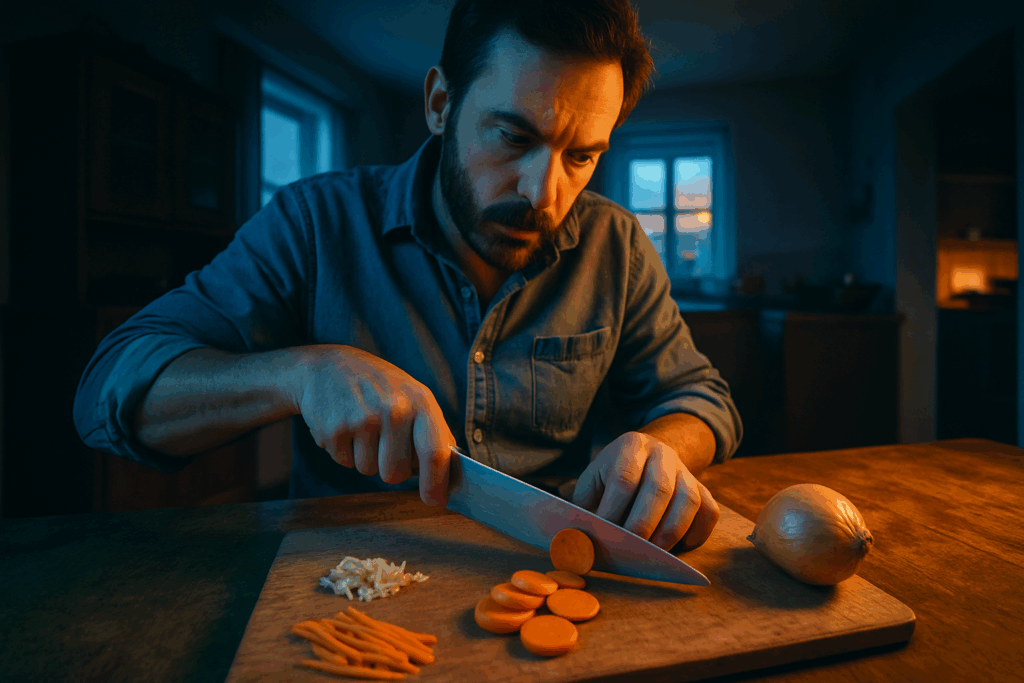
Small, uniform cubes often used for vegetables like onions, bell peppers, and potatoes. Great for stir fries, soups, and salsas where even cooking is key.
2. Slice
Thin, even cuts used for items like cucumbers, tomatoes, and meats. Slicing is essential for dishes that need visual appeal or quick cooking.
3. Mince
Finely chopped pieces, often used for garlic, ginger, or herbs. A staple when you need intense flavor distributed evenly throughout a dish.
4. Chiffonade
A technique for leafy herbs and greens such as basil or kale. Leaves are rolled and cut into fine ribbons ideal for garnishes or blending aroma into soups and sauces.
5. Julienne
Stick like strips, perfect for carrots, zucchini, or bell peppers. Common in stir fries and salads where texture and visual presentation matter.
Understanding When to Use Each Cut
Dice: Best for even cooking and blending flavors in dishes like chili, stews, and sautés.
Slice: Ideal when shape and surface area matter think grilled eggplants or sliced meats.
Mince: Great for infusing garlic or aromatics deeply into sauces and marinades.
Chiffonade: Use when adding leafy greens or herbs as a finishing touch.
Julienne: Works well for raw veggie sides or quick cooking ingredients in hot oils.
Let the Knife (and Gravity) Do the Work
One of the secrets to mastering any knife cut is understanding the angle and rhythm:
Keep your knife at a slight forward or backward angle, depending on the cut.
Use a gentle rocking motion for slicing and mincing.
Let gravity assist don’t push down hard. Aim for control, not force.
The right motion not only makes cuts cleaner but also reduces fatigue and improves safety.
Practice slowly, and speed will follow naturally with confidence and muscle memory.
Knife Safety 101
Let’s start at the base: the cutting board. If it’s sliding even a little, it’s a problem. Lay a damp kitchen towel or a grippy shelf liner under your board to lock it down. Hardwood boards are ideal they’re easier on your knife and less likely to harbor bacteria if you keep them clean. Plastic can work too, especially for meat, but avoid glass or stone. They’ll trash your blade.
Now, the ‘claw hold.’ It feels awkward at first, but it keeps your fingertips intact. Tuck your knuckles forward and grip the ingredient like a claw. Your knife rides along your knuckles, not your skin. It creates a guide wall for safer, more controlled cutting.
Finally, take care of your tools. Wash your knife by hand no dishwasher. Dry it immediately. Store it in a knife block, on a magnetic strip, or in a sheath. Don’t toss it loose in a drawer. A well maintained blade doesn’t just cut better; it reduces slip ups and prolongs your grip control. Remember: sharp is safe, dull is dangerous.
Leveling Up with Advanced Skills
When you’re ready to move beyond prep work and into precision territory, these three techniques separate the home cooks from the confident ones.
Breaking Down Poultry Without Waste
Whole birds are cheaper and more versatile if you know how to handle them. Start with a sharp boning knife and work with the joints, not through bone. Use your fingers to find the natural breaks: thigh, drumstick, wings. Carve close to the carcass to keep the meat intact. Set aside scraps for stock. No waste, just planning.
Supreme Citrus Technique for Cleaner Flavor
If you’re still peeling oranges like it’s snack time in kindergarten, it’s time to upgrade. Segmenting citrus (a.k.a. supreming) gives you clean, membrane free slices that elevate both presentation and taste. Cut off the top and bottom, slice away the peel following the curve, then glide your blade between membranes. Works with grapefruits, too. No pith, no bitterness just bright, clean acid.
Filleting Fish with Confidence
Fear of ruining a filet keeps a lot of people stuck in the frozen aisle. Start with a flexible fillet knife and let geometry work for you. Make an incision behind the gills, angle toward the tail, and stay flush with the backbone. Pull the fillet off in one go, using long, even strokes. Feel for pin bones, and remove with tweezers. Rinse only if you must, then pat dry. Done right, it’s cleaner, faster, and tastes fresher than anything pre packaged.
Common Mistakes to Avoid
Mastering knife skills isn’t just about learning what to do it’s also about knowing what not to do. Avoid these common pitfalls that hinder both your progress and your tools.
Using the Wrong Knife for the Job
Not all knives are interchangeable. Choosing the right knife makes prep work faster, safer, and more effective.
Chef’s knife: Ideal for chopping vegetables, herbs, and proteins.
Paring knife: Best for peeling fruits and small, precise cuts.
Serrated knife: Designed for slicing bread and delicate skinned produce like tomatoes.
Trying to, say, core an apple with a chef’s knife or mince onion with a serrated one slows your process and increases the risk of accidents.
Dulling Your Blade on the Wrong Surface
Your cutting surface plays a huge role in blade longevity. Hard surfaces cause more wear than you might realize.
Avoid cutting on stone, glass, or metal.
Opt for wood or high quality plastic boards to protect your edge.
Remember: a dull knife isn’t just ineffective it’s more likely to slip and cause injury.
Skipping Sharpening (and Misunderstanding Honing)
Many home cooks believe a honing rod replaces sharpening. It doesn’t. Honing realigns the blade edge, but it doesn’t actually sharpen.
Hone your knife regularly (weekly or after every use)
Sharpen your knives with a whetstone or professional service every few months, depending on use
Keeping your blade sharp not only improves performance, but also protects your food from being mangled and your hands from dangerous slips.
Related Read: Common Baking Mistakes and How to Avoid Them
Putting It All Into Practice
Improvement doesn’t come from reading it comes from repetition. That’s why building meal prep routines is the fastest way to lock in your knife skills. Grab a pile of onions, peppers, or herbs and set a timer. Doing the same cuts over and over builds muscle memory you can rely on without thinking.
Start with produce heavy recipes. They’re predictable, forgiving, and give you tons of chances to practice different techniques dicing, chiffonade, julienne. Look for meals where chopping is 70% of the prep. Soups, stir fries, and grain bowls are ideal.
And here’s the kicker: film yourself. Just a quick clip with your phone. You’ll notice how your grip slips, how your elbow flares out, or how your cutting board shifts a little each time. Posture problems waste energy and lead to injury over time. It’s easier to fix what you can see. Do it weekly. Don’t overthink it.
Final Reminder
Knife skills aren’t fast tracked. They’re earned. It’s the hundredth time slicing an onion that sharpens more than your blade it sharpens your hand, your eye, your timing. Stop rushing and start repeating. Precision isn’t about flair; it’s about habit. Clean cuts come from practiced angles and patience. Each herb chopped, each chicken broken down these are reps that build muscle memory and confidence. Skill is built in the doing, not the watching. Sharper meals start with slower hands, practiced often.

 Ask Jalric Velmyre how they got into delicious recipe ideas and you'll probably get a longer answer than you expected. The short version: Jalric started doing it, got genuinely hooked, and at some point realized they had accumulated enough hard-won knowledge that it would be a waste not to share it. So they started writing.
What makes Jalric worth reading is that they skips the obvious stuff. Nobody needs another surface-level take on Delicious Recipe Ideas, Meal Prep Ideas, Healthy Eating Tips. What readers actually want is the nuance — the part that only becomes clear after you've made a few mistakes and figured out why. That's the territory Jalric operates in. The writing is direct, occasionally blunt, and always built around what's actually true rather than what sounds good in an article. They has little patience for filler, which means they's pieces tend to be denser with real information than the average post on the same subject.
Jalric doesn't write to impress anyone. They writes because they has things to say that they genuinely thinks people should hear. That motivation — basic as it sounds — produces something noticeably different from content written for clicks or word count. Readers pick up on it. The comments on Jalric's work tend to reflect that.
Ask Jalric Velmyre how they got into delicious recipe ideas and you'll probably get a longer answer than you expected. The short version: Jalric started doing it, got genuinely hooked, and at some point realized they had accumulated enough hard-won knowledge that it would be a waste not to share it. So they started writing.
What makes Jalric worth reading is that they skips the obvious stuff. Nobody needs another surface-level take on Delicious Recipe Ideas, Meal Prep Ideas, Healthy Eating Tips. What readers actually want is the nuance — the part that only becomes clear after you've made a few mistakes and figured out why. That's the territory Jalric operates in. The writing is direct, occasionally blunt, and always built around what's actually true rather than what sounds good in an article. They has little patience for filler, which means they's pieces tend to be denser with real information than the average post on the same subject.
Jalric doesn't write to impress anyone. They writes because they has things to say that they genuinely thinks people should hear. That motivation — basic as it sounds — produces something noticeably different from content written for clicks or word count. Readers pick up on it. The comments on Jalric's work tend to reflect that.